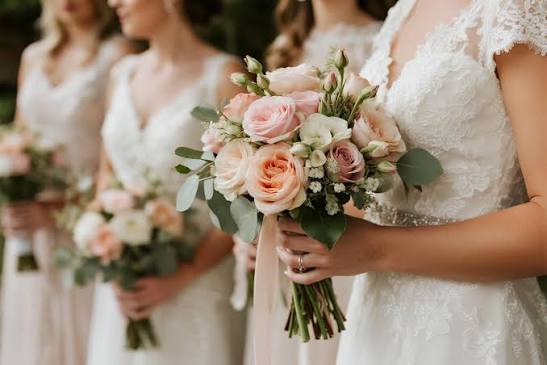
Your bouquet appears in more wedding photographs than any other single object, including the cake, the venue and most of your guests.
It also has to survive a twelve-hour day, much of it out of water and often in full sun. So wedding bouquet flowers are chosen on two criteria at once: how they look, and how they behave.
Here is how a florist weighs both.
Bouquet Shapes and What They Suit
Round or Posy
A compact, domed shape with a clean silhouette. Timeless, easy to hold, photographs neatly. Works with almost every dress.
Best with: roses, ranunculus, lisianthus, dahlias.
Loose Hand-Tied
The most popular shape right now. Spiralled stems, natural movement, visible individual blooms, slightly asymmetric.
Best with: garden roses, dahlias, sweet peas, mixed seasonal textures.
Cascade or Teardrop
A trailing shape that flows downward. Dramatic and formal, and it has come back strongly in recent years.
Best with: orchids, trailing foliage, jasmine, amaranthus. Heavier to hold, so ask about weight.
Sheaf or Arm Bouquet
Stems held long and gathered to one side, carried in the crook of the arm. Modern, architectural, very striking with natives.
Best with: banksia, proteas, gum, gladioli, delphinium.
Single Stem
One perfect bloom, sometimes wrapped in ribbon. Understated and confident. Works beautifully at registry and elopement weddings.
Best with: a single king protea, oriental lily, calla lily or large dahlia.
Nosegay
A small tight posy, often for bridesmaids or flower girls. Cost-effective and easy to carry.
Which Wedding Bouquet Flowers Actually Last the Day
This is the question most couples never ask and every florist wishes they would.
Excellent out of water (six-plus hours): orchids, proteas, banksia, waratah, gum, kangaroo paw, carnations, chrysanthemums, lisianthus, ranunculus (in cool weather).
Good with care: roses, dahlias, tulips, stock, anemones.
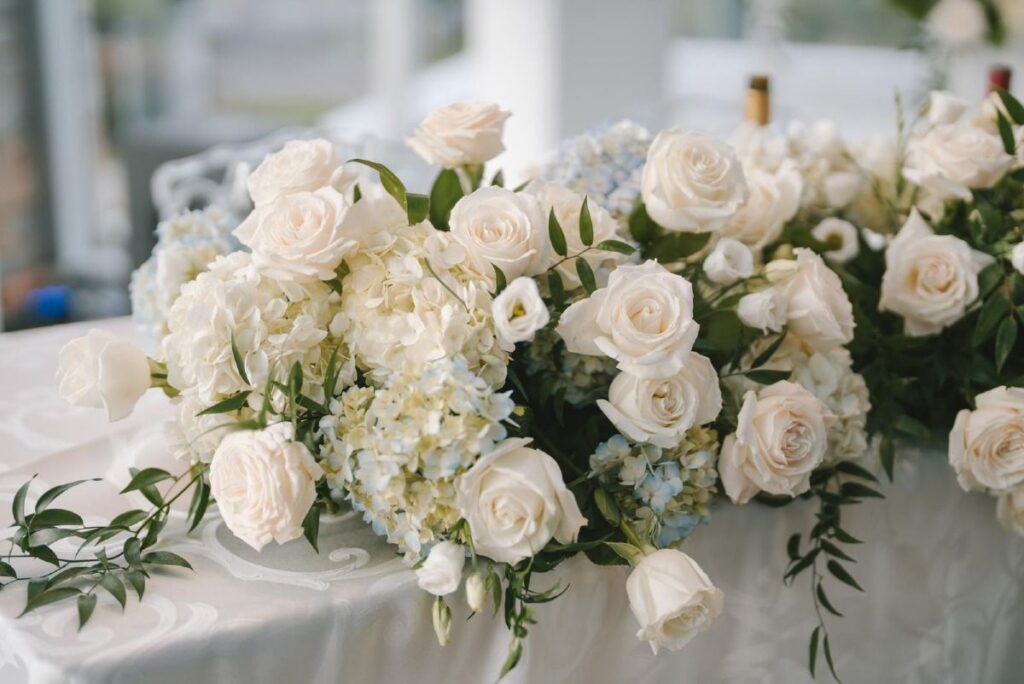
Difficult in heat: hydrangeas, sweet peas, gardenias, garden roses, peonies. Beautiful, thirsty, and prone to wilting at an outdoor summer ceremony.
A skilled florist manages the difficult ones with hydration mechanics, cool storage until the last moment and a water source for the bouquet between ceremony and reception. Ask how they plan to do it.
Matching the Bouquet to the Dress
Proportion is everything. A large bouquet in front of a fitted dress hides the silhouette. A small posy against a full ballgown disappears.
Fitted or column dress: a smaller, elongated or loose bouquet. Keep the waist visible.
Ballgown: a fuller round or loose bouquet, or a cascade. Scale up to compete with the skirt.
A-line: almost anything works. This is the most forgiving silhouette.
Separates or a suit: an arm sheaf or a structural single stem. Modern shapes suit modern outfits.
Detailed lace or beading: simpler wedding bouquet flowers in a restrained palette, so the two do not compete.
And bring a photo of the dress to your consultation. Every good florist asks for it.
Sydney Seasonal Availability
Spring: ranunculus, tulips, sweet peas, stock, blossom, peonies in a narrow October to November window.
Summer: dahlias, hydrangeas, lisianthus, gardenia, tropicals, natives.
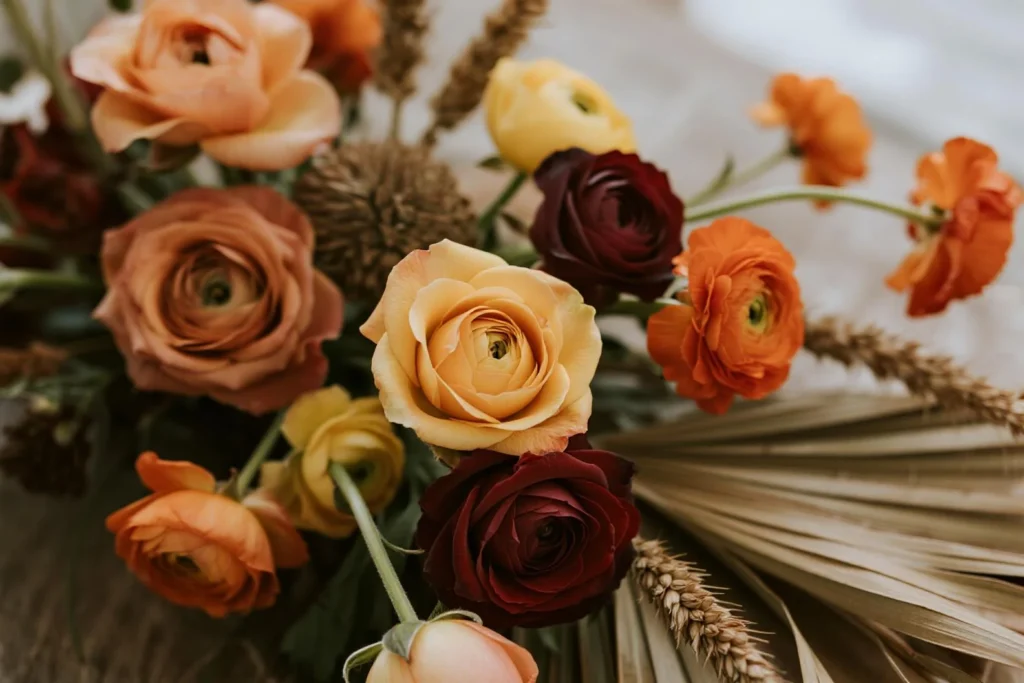
Autumn: dahlias early, chrysanthemums, proteas, banksia, berries, warm tones.
Winter: anemones, ranunculus, tulips, hellebores, natives, dramatic foliage.
Australian natives deserve a serious look for any Sydney wedding. They are structural, dramatic, heat-tolerant and unmistakably of this place. The University of Western Australia’s botany discipline covers Australian flora, plant adaptation and conservation, and the reason natives cope so well in a bouquet is the same reason they cope in the bush: they are built for this climate.
They also dry beautifully, which means the bouquet can be kept rather than composted.
The Practical Details Nobody Mentions
Weight. Cascades and large loose bouquets can be genuinely heavy. Hold a mock-up if you can.
Handle finish. Ribbon-wrapped, exposed stems, fabric from a family garment, or a wired handle. Say what you want early.
Allergies. Tell your florist. Low-pollen options exist and are plentiful.
The toss. If you plan one, order a small separate toss bouquet so your real one survives.
Preservation. Decide before the day. Pressing, resin, air drying and freeze drying all need the bouquet delivered to a preserver quickly.
The Legal Bit, Briefly
While you are booking flowers, do not lose track of the paperwork. In New South Wales you must lodge a Notice of Intended Marriage at least one month before the ceremony, and the state’s guide to what is required to marry in NSW sets out eligibility, documents, witnesses and timing.
It is worth checking early, because that one-month minimum catches out a surprising number of couples planning a short-notice wedding.
Budget Guide
Bridal bouquet: $180 to $450 depending on size, shape and stem choice. Cascades and out-of-season blooms sit at the top.
Bridesmaid bouquets: $80 to $180 each.
Flower girl posy: $45 to $90.
Toss bouquet: $60 to $100.
If the budget is tight, put it into the bridal bouquet and simplify the bridesmaids. Yours is the one in every photograph.
Frequently Asked Questions
When should I order my wedding bouquet flowers?
With the rest of your wedding flowers: nine to twelve months out for peak Sydney season, six months minimum otherwise.
Will my bouquet wilt?
Not with the right stems and proper hydration. Choose heat-tolerant blooms for an outdoor summer ceremony and ask how the bouquet will be kept between ceremony and reception.
Can I have peonies?
Only reliably in a narrow spring window in Australia. Outside it, expect imported prices and no guarantee.
Should bridesmaid bouquets match mine?
Smaller versions in the same palette is the standard and safest approach. Contrasting bouquets can work but need a confident designer.
Can I keep my bouquet?
Yes, with professional preservation, or by choosing natives and drying it yourself.
How heavy will it be?
A round posy is light. A large cascade can be several kilograms. Ask to hold a mock-up if you are unsure.
The Takeaway
Choose your wedding bouquet flowers for how they photograph and how they behave. Match the shape to your dress, buy in season, take natives seriously in a Sydney summer, and ask your florist exactly how the bouquet will be kept hydrated.
Get those right and you will love it in every photograph for the rest of your life.